

Coping with PTSD symptoms as a First Responder:
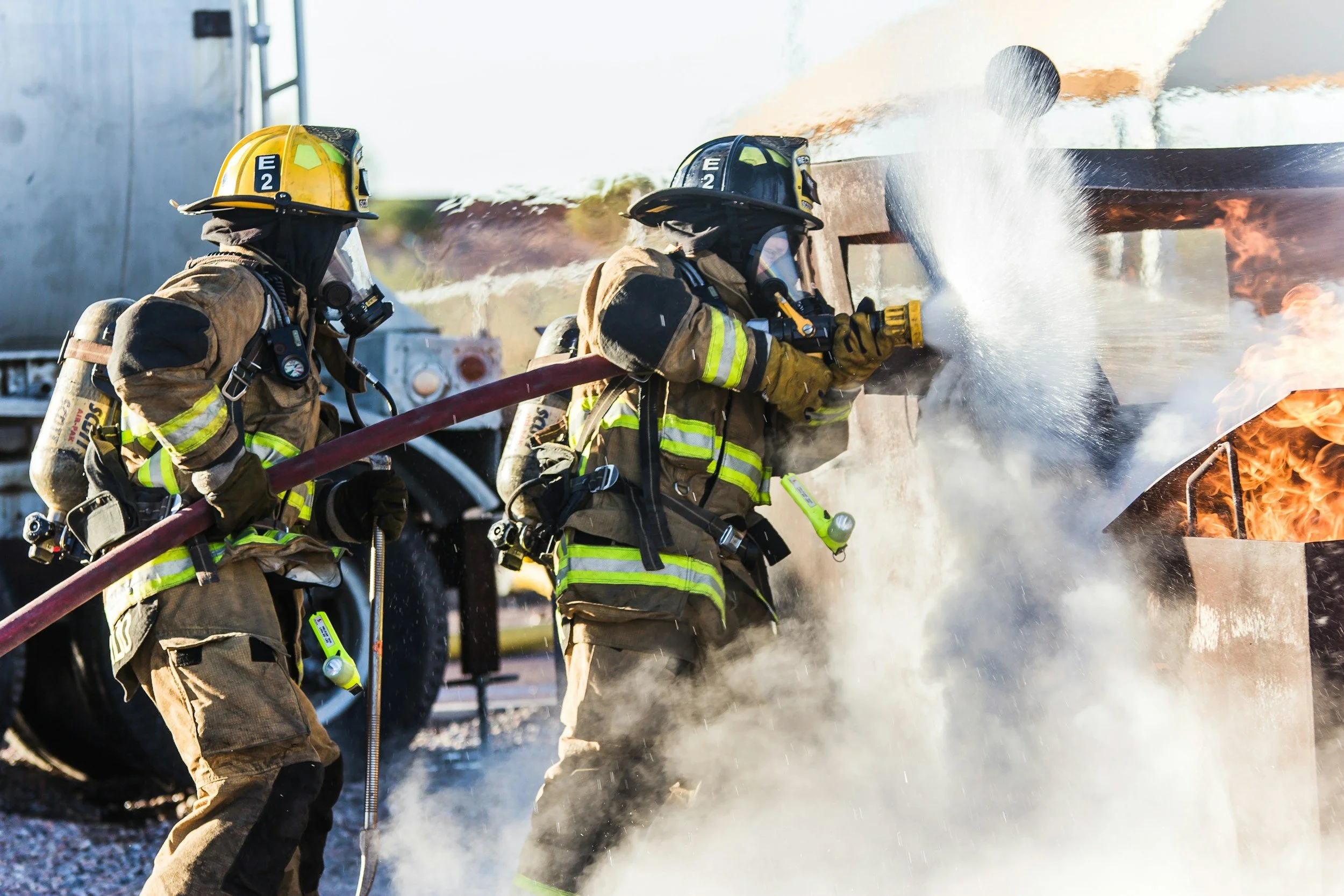
You're Trained to Respond to Emergencies—But You're Human Too.
First responder mental health matters just as much as the lives you save. As a first responder—whether you're a law enforcement officer, firefighter, paramedic, or EMT—you're often the first on scene when someone is having the worst day of their life. You train for the chaos, the crisis, and the unknown. What often gets overlooked is the impact those experiences can have on you long after the call is over.
Many first responders experience symptoms related to trauma and PTSD, including intrusive memories, avoidance, irritability, sleep difficulties, emotional numbness, or turning to unhealthy coping habits. The reality is that resilience doesn't mean being unaffected—it means finding healthy ways to carry what you've experienced.
Real Calls, Real Impact
In my work alongside law enforcement and firefighters, I've been on calls where the adrenaline doesn't let up for hours—the kind where you're standing shoulder to shoulder at a scene, managing crisis after crisis, and there's no time to process anything in the moment. I've watched officers hold it together through the most harrowing situations, only to sit in silence on the drive back, unsure what to do with what they just witnessed.
I've seen firefighters walk out of a structure fire, gear still heavy with smoke, and head straight to the next call without a moment to breathe after grabbing a citizen in distress. I've listened as someone described the call that keeps replaying at 2 a.m.—the one they can't unsee—while wondering if something is wrong with them for not being able to "just move on."
Here's what I want you to know: there's nothing wrong with you. The human brain isn't built to absorb that much pain without support. And the bravest thing you can do isn't pushing through—it's asking for help.
Working alongside first responders and their families, I've seen how unprocessed trauma can quietly spill into relationships, physical health, and everyday life. I've also seen the incredible growth that happens when someone finally gives themselves permission to address it.
Therapy Options That Help First Responders Heal
Not all therapy is the same, and you deserve approaches backed by research and designed to work with the unique experiences you carry. Two of the most effective, evidence-based therapies for first responder trauma are:
- EMDR (Eye Movement Desensitization and Reprocessing): An evidence-based therapy that helps the brain reprocess traumatic memories so they lose their emotional grip. During EMDR, guided bilateral eye movements help "unlink" triggers from distressing memories—so the call you can't stop replaying no longer hijacks your nervous system. Research shows EMDR is highly effective for PTSD in first responders, often delivering results in fewer sessions than traditional talk therapy. The memory remains, but it no longer carries the same weight.
- ART (Accelerated Resolution Therapy): A rapid, evidence-based therapy rooted in EMDR that uses guided eye movements to help you replace distressing images with positive ones—often in as few as 1 to 5 sessions. ART is especially powerful for first responders because it typically doesn't require you to verbalize every detail of the trauma. It's direct, structured, and built for people who want tangible relief without spending months revisiting the hardest moments. For responders juggling shift work and limited time, ART's shorter timeline can be a game-changer.
Both EMDR and ART are proven, eye-movement-based therapies that help the brain reprocess trauma so it stops living in your body. The difference? EMDR goes deeper and can address multiple layers of trauma over time, while ART moves quickly and focuses on replacing distressing images. Many first responders benefit from one or both—and we'll find the right fit for your story.
Coping Strategies That Make a Difference
A few additional coping strategies that can support your healing include:
- Prioritizing physical health through movement, nutrition, and rest
- Connecting with trusted peers who understand the job—the brotherhood and sisterhood matters
- Making time for self-care, hobbies, and activities that help you recharge
- Setting boundaries around work and home life so the job doesn't follow you through the door
You Don't Have to Carry This Alone
You don't have to keep reliving the call, carrying the weight alone, or pushing through until you burn out. First responder therapy isn't about weakness—it's about giving yourself the same care you give others every single shift.
If you're ready to explore healthier ways to cope with the demands of the job, I'd be honored to help. Reach out to Lexi Eller, LCSW-S at lexi@emberlighthousewellness.com or 972-333-3870 by text/call for an upcoming appointment.
You respond to everyone else's emergencies. Let someone help with yours.
— Lexi Eller, LCSW-S
Ember & Lighthouse Wellness | Waxahachie, TX
Trauma Therapy • First Responders • Veterans • EMDR • ART • Texas
References:
https://www.ncbi.nlm.nih.gov/pmc/articles/PMC6624844/
https://journals.sagepub.com/doi/full/10.1177/1078390319871997
https://www.firstresponderfamilypsychology.com/acceleratedresolutiontherapy
https://relevancerecovery.com/blog/accelerated-resolution-therapy-vs-emdr-therapy/
https://www.chateaurecovery.com/emdr-therapy-for-first-responders-what-it-is-and-how-it-works
https://asanarecovery.com/emdr-therapy-first-responders/